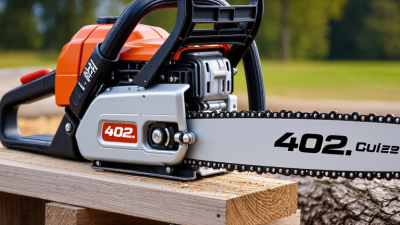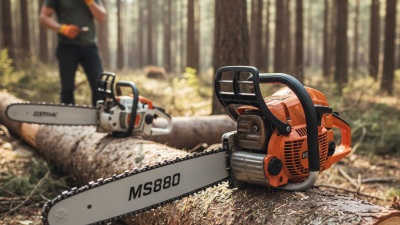
Choosing the right Gasoline Chain Saw starts with the wood you actually cut, not the largest engine on the shelf. A homeowner clearing storm branches needs different equipment from a crew bucking hardwood logs all day. Bar length, engine displacement, weight, vibration control, and local service access all affect the choice. A saw that feels manageable beside a store display may feel heavy after an hour in the yard.
The market is substantial. Grand View Research estimated the global chainsaw market at approximately US$4.1 billion in 2023. That figure describes market value, not proof that one type of saw suits every buyer. For practical selection, the USDA Forest Service’s chainsaw safety guidance is a more useful reference: it emphasizes appropriate equipment, maintenance, and safe operating practices. OSHA guidance likewise highlights protective equipment and safe handling. These sources matter because cutting capacity alone does not make a saw suitable.
Pay attention to the details you can verify: the manufacturer’s stated power-to-weight specifications, compatible bar lengths, chain-brake design, and replacement-part availability. Then consider the worksite. A cold morning, a stack of dense oak, and a long walk to the cutting area can make weight and starting reliability feel more important than extra power. Not just power. I would not pretend there is one perfect model; even experienced users may trade speed for control. A careful comparison helps you choose a Gasoline Chain Saw that fits the work, your handling ability, and the maintenance you are prepared to do.
Start by listing the cuts you actually expect to make: trimming storm-damaged limbs, cutting firewood, or processing fallen trees. These jobs place different demands on a saw. Small branches and occasional light cuts rarely justify carrying a heavy machine. Larger hardwood rounds need more cutting capacity, especially when several cuts are required for each piece. Measure typical wood diameter, and note the hardest species you handle. Guessing from one unusually large log can skew your choice.
Estimate workload by counting cuts per session and hours of use, not just days per year. A few short sessions differ from several hours of steady bucking. Longer work makes weight, vibration, refueling, and routine maintenance more noticeable. Even careful estimates miss. Keep a simple log for a week or two: record wood size, cut count, and time spent. That detail can reveal whether your needs are occasional or demanding. A saw that seems manageable in a store may feel tiring after repeated cuts. Consider the balance between enough cutting capacity and a weight you can control comfortably, and leave room for breaks and changing conditions.
Common guide-bar length ranges by cutting task. Use the task you perform most often—and how frequently you work—to narrow your choice.
How to use this chart: Occasional light work may call for a smaller, easier-to-handle saw; frequent firewood cutting or larger trees usually requires more power and a longer bar. These ranges are general starting points, not a substitute for the saw manufacturer’s instructions, wood conditions, or safe-cutting training.
Engine power tells you how much work a saw can sustain; displacement, measured in cubic centimeters, is only one clue. Compare power-to-weight figures, not engine size alone. A larger engine may pull through thick hardwood, but extra weight becomes tiring during repeated cuts. For pruning and small limbs, a lighter saw is often easier to control. Check how the manufacturer measured power, too; figures from different test conditions may not compare cleanly.
Match displacement and power to the wood you actually cut. Occasional firewood rounds need less capacity than frequent cuts through dense, wide logs. Chain sharpness, bar length, and cutting technique also affect performance. Specs can mislead. I would not choose by cc alone. The CDC has cited an older estimate of about 36,000 U.S. emergency-room visits for chainsaw injuries annually, based on Consumer Product Safety Commission surveillance. That historical figure is not a current rate, but it reinforces the value of manageable weight and predictable control.
Starting systems matter on cold mornings and after brief stops. A decompression valve reduces pull effort; a primer bulb helps move fuel, while an assisted-start mechanism can make repeated starts easier. Test the saw’s cold-start steps before buying, if possible. A system that seems simple on paper may still feel awkward with gloves. Look for clear instructions and accessible controls, then consider whether you can restart it without straining.
For a gasoline chain saw, choose a bar that suits the wood you actually cut, not the largest tree you might meet. The USDA Forest Service’s Chain Saw and Crosscut Saw Training Course gives a practical guide: the bar should be about 2 inches longer than the wood’s diameter when cutting from one side. That extra reach can reduce the need to reposition the saw. A bar that is much longer than your regular work requires, however, adds weight and can feel awkward when trimming limbs. Measure typical logs before buying.
Chain configuration matters just as much. Pitch is the distance between chain rivets, while gauge is the thickness of the drive links; both must match the bar and drive sprocket. Check the saw’s manual for the specified measurements rather than guessing from appearance. For routine firewood cutting, a standard low-profile chain may feel easier to control, while larger, more demanding cuts need a configuration approved for that saw. There is no universal “best” chain. I’d still treat the two-inch bar guideline as a starting point, not a promise; wood shape and cutting position change the job.
Tips: Check pitch, gauge, and drive-link count before replacing a chain. Keep the bar nose clear of nearby branches; tip contact can trigger kickback. Choose manageable weight. Your arms notice it.
A gasoline chain saw should feel controlled before you consider its cutting power. Check for a chain brake, front hand guard, throttle lockout, and a chain designed to reduce kickback. These features help lower risk, but they cannot prevent every injury. Read the manual and wear proper eye, hearing, hand, leg, and foot protection. Never treat a safety mechanism as a substitute for careful technique.
With the saw switched off, assess its balance and grip. Can you hold it steadily without your wrists twisting? Is the throttle easy to operate without shifting your grip? Weight matters. A saw that feels manageable for a minute may become tiring during longer work. That detail is easy to underestimate.
Maintenance affects both cutting and control. Before each use, inspect the chain, guide bar, and controls; check chain tension and lubrication as the manual directs. Keep the chain sharp, since a dull one can require more pressure and behave unpredictably. Clean or replace the air filter as needed, and use only the fuel mixture specified by the manufacturer. Small routines help. I would not assume maintenance is effortless: dust, spilled fuel, and a stubborn tension adjuster can make a quick check take longer than expected.
| Evaluation Dimension | What to Look For | Why It Matters | Practical Check | Priority |
|---|---|---|---|---|
| Chain brake and front hand guard | A functional chain brake and a guard in front of the front handle. | The brake is designed to stop chain movement in certain kickback situations; the guard helps protect the operator’s hand. Neither feature eliminates risk. | Check the owner’s manual for the brake test procedure and confirm the brake engages and releases as specified. | Essential |
| Throttle lockout and chain catcher | A throttle lockout that helps prevent unintended acceleration, plus a chain catcher below the guide bar. | These components help reduce the chance of accidental throttle operation and can help limit injury if the chain derails or breaks. | Inspect that the controls move freely, return correctly, and are not cracked, loose, or missing. | Essential |
| Low-kickback cutting equipment | A compatible low-kickback chain and guide bar, as specified for the saw. | Kickback can occur when the moving chain near the bar tip contacts an object or is pinched. Low-kickback equipment can reduce, but cannot prevent, the risk. | Verify that the chain, bar, and saw are compatible; never fit parts solely because they appear to be the right size. | Essential |
| Weight and balance | A manageable powerhead weight and balanced feel with the intended bar fitted. | A saw that is tiring or awkward to control can make accurate handling more difficult, especially during extended ground-level work. | Compare the stated operating weight, including the bar and chain where available. If possible, assess the balance with the engine off. | High |
| Vibration and grip | Effective anti-vibration design, secure handles, and controls that are easy to reach while maintaining a firm grip. | Reduced vibration can improve comfort, but it does not remove the need for breaks or proper protective equipment. | Compare published front- and rear-handle vibration figures if available; check that handles are undamaged and controls are accessible. | High |
| Guide-bar length and intended work | A bar length suited to the typical diameter of the wood and the saw’s approved specifications. | A longer bar can add weight and requires more power. The bar should not be chosen as a substitute for safe cutting technique or an adequately sized saw. | Match the bar and chain to the manufacturer’s approved combinations and choose a saw for the most common planned tasks. | High |
| Chain tensioning and sharpening | Accessible tensioning points and clear instructions for tension checks, chain sharpening, and bar care. | A correctly tensioned, sharp chain supports efficient cutting. A loose or damaged chain can create additional hazards and wear. | Check whether adjustment needs supplied tools, and confirm that replacement chains and sharpening information are readily available. | High |
| Fueling and routine service | Clear requirements for fuel type, oil, fuel mixing if applicable, air-filter cleaning, and scheduled inspection. | Gasoline chain saws need regular engine and cutting-system maintenance. Incorrect fuel or oil can damage the engine or impair operation. | Follow the exact fuel mixture and service schedule in the saw’s manual; mixture ratios and requirements vary by model. | High |
| Noise, exhaust, and work setting | Published sound information, a serviceable muffler, and a work plan that allows outdoor operation. | Gasoline engines produce exhaust and significant noise. A gasoline chain saw must not be operated in an enclosed or poorly ventilated area. | Plan to work outdoors, use hearing and eye protection, and follow local rules for noise and emissions. | High |
| Protective equipment and training | A plan to use suitable chainsaw protective equipment and obtain instruction before operating. | A saw’s built-in features do not replace safe work practices. Chainsaw chaps or trousers, footwear, gloves, eye and hearing protection, and a helmet may be appropriate to the task and applicable guidance. | Read the manual and follow recognized training and local safety guidance; avoid overhead cutting and do not operate from a ladder. | Essential |
A gasoline chain saw is only a good value when it can be serviced nearby. Compare the purchase price with likely costs for chain sharpening, bar replacement, and routine engine work. Ask a local repair shop which models it accepts, how long common repairs take, and whether essential parts are stocked. A low sticker price loses appeal when a saw sits idle during peak work.
Reliability is more than a sturdy housing. Check that the air filter is easy to reach, the chain tensioner is simple to adjust, and replacement chains match a standard size. Hold the saw before buying; a few extra pounds feel significant after repeated cuts. The U.S. Bureau of Labor Statistics projects 4% employment growth for small engine mechanics from 2022 to 2032, about as fast as average. That broad forecast does not guarantee a technician nearby, so verify local service access rather than relying on national averages. Warranty terms matter, too. Read what maintenance records and wear parts are excluded; the fine print can surprise you.
Tips: Call two service shops before purchasing. Ask about labor rates, typical turnaround, and parts availability. Compare those answers with the price difference between models. I would still leave room for uncertainty: repair demand changes with the season, and even a reliable saw can need service.