Essential Tips for Choosing the Right Gasoline Chain Saw?
Choosing the right gasoline chain saw can be daunting. With so many options, it’s easy to feel overwhelmed. Expert Thomas Reed, a renowned authority in outdoor power equipment, states, “Selecting the perfect gasoline chain saw requires understanding your specific needs.”
Each model has unique features. Some are lightweight, while others offer more power. Consider the tasks you will perform. A chain saw that is too heavy may cause fatigue quickly. Conversely, an underpowered saw may not cut efficiently.
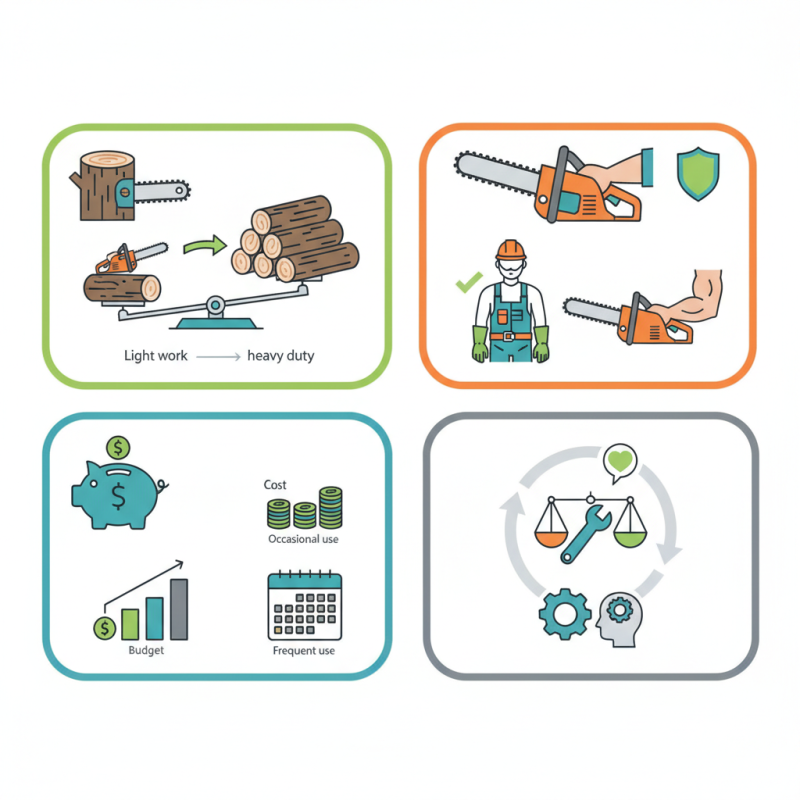
It’s also vital to prioritize safety and comfort. Ensure the saw has effective safety features. Check the grip and weight to prevent injuries. Remember, the ideal gasoline chain saw balances power and user preference. Reflect on your budget and usage frequency when making a choice.
Understanding Your Needs: Assessing the Purpose of the Chainsaw
When selecting a gasoline chainsaw, it’s crucial to understand your specific needs. Start by assessing the purpose of the chainsaw. Are you cutting firewood, trimming branches, or tackling more significant projects? Each use demands different features. For light pruning, a smaller, lighter saw is often sufficient. But for larger tasks, a heavy-duty model may be necessary.
Consider the frequency of use as well. If you are a casual user, investing in a high-end model might not be practical. On the other hand, professionals may require tools that can withstand daily wear. Also, think about the size of the trees you usually work with. A larger bar length offers better performance for thick cuts but can be challenging to maneuver.
It’s easy to overlook safety features when focusing on power and convenience. Proper safety gear is a must, regardless of the saw’s intended use. Certain safety measures may feel inconvenient but are crucial. Always reflect on how often you’ll use the saw. Higher power often leads to increased risk, especially for inexperienced users. Understanding your needs ensures you invest in the right tool without overspending.
Essential Tips for Choosing the Right Gasoline Chain Saw
| Feature |
Importance |
Recommendation |
| Engine Size |
Determines power and cutting ability |
Choose between 30cc to 60cc for home use |
| Bar Length |
Affects the size of logs you can cut |
Opt for 16 to 20 inches for general use |
| Weight |
Impacts maneuverability and fatigue |
Choose a manageable weight for comfortable use |
| Safety Features |
Essential to prevent accidents |
Look for chain brakes and low-kickback bars |
| Fuel Efficiency |
Affects operational cost |
Select models with better fuel consumption ratings |
Key Features to Consider in a Gasoline Chainsaw
When choosing a gasoline chainsaw, several key features should influence your decision. The engine power is crucial. Generally, the engine size ranges from 30cc to 70cc. Research indicates that a chainsaw with a 50cc engine can handle most yard work efficiently. However, many consumers overlook the importance of weight. A lighter model can improve maneuverability, especially for prolonged use. Some users may find that heavier saws lead to fatigue and decreased performance.
Another point to consider is the bar length. Bars typically range from 12 inches to over 24 inches. For most home projects, a 16-18 inch bar suffices for cutting firewood or trimming trees. Yet, a longer bar could be necessary for larger trees. Additionally, the chain type can make a significant difference in performance. Low-kickback chains enhance safety but may cut slower. In fact, reports show that about 50% of accidents occur due to improper chain selection.
Lastly, always check for safety features. Chain brakes are vital. They can prevent serious injuries during operation. This aspect is often underestimated in the purchasing process. Evaluating these features holistically can lead to a more informed and safer choice. Ensure you're not just drawn to a model because of its popularity. Make a well-rounded decision based on your specific needs.
Evaluating Engine Power and Cutting Performance
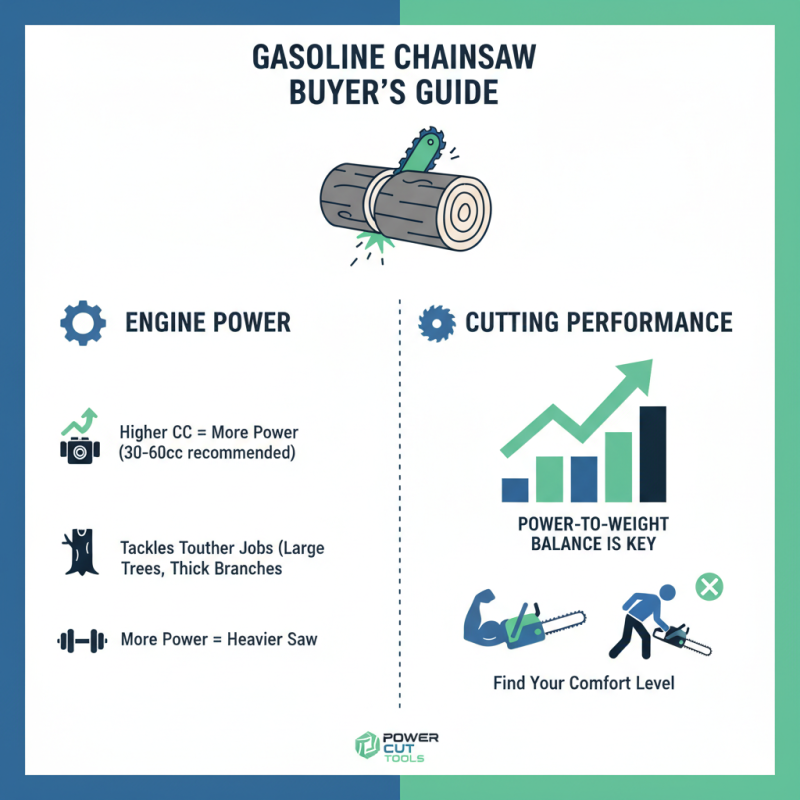
When selecting a gasoline chainsaw, engine power is crucial. A chainsaw with a higher horsepower usually offers better cutting performance. This means it can handle tougher jobs, like felling large trees or cutting thick branches. Look for models with power between 30cc and 60cc. However, higher power also means more weight. It's essential to find a balance that suits your comfort level.
Cutting performance depends on various factors, including chain speed and bar length. A longer bar can cut through larger pieces of wood. However, it can also make the saw harder to control. Therefore, think carefully about your tasks before choosing a bar length. Test the saw to see how it feels. Many users overlook the importance of practice, but handling a chainsaw well is essential for effective work.
Always pay attention to safety features as well, like chain brakes and automatic oilers. They can enhance the saw’s performance and your safety during operation. Make sure to evaluate any saw you consider. Ignoring smaller details may lead to frustrating experiences later. Choosing the right chainsaw is an ongoing journey. Stay informed and adjust your choice as your skills and needs develop.
Safety Features and Ergonomics in Chainsaw Design
When selecting a gasoline chainsaw, safety features and ergonomics are crucial aspects. A recent industry report indicates that over 30% of chainsaw injuries occur due to improper handling and lack of safety mechanisms. Features like chain brakes and anti-vibration systems can significantly reduce the risk of accidents. A chain brake can stop the chain within milliseconds. This feature is essential for protecting users in case of kickback incidents.
Ergonomics also plays a vital role in user comfort and safety. Chainsaws designed with lightweight materials can reduce fatigue during extended use. According to a study from the American National Standards Institute, chainsaws with ergonomic grips can lower the potential for repetitive strain injuries by 40%. Hand placement matters too; a well-designed handle allows better control and stability. Users often underestimate the impact of weight distribution. A poorly balanced saw can lead to mishaps, especially for novice users.
A comfortable chainsaw is more than just a luxury. It is a necessity for effective and safe operation. An uncomfortable grip can lead to slips and accidents. Some users might not realize the importance of personal comfort until after they've experienced pain during tasks. The right safety features and ergonomic design can lead to a more confident user, fostering a proactive approach to chainsaw operations.
Essential Tips for Choosing the Right Gasoline Chain Saw