
China Top Garden Tools Manufacturers for Global Buyers
China has become a major sourcing destination for Garden Tools used by retailers, landscapers, and professional distributors worldwide. Its manufacturers produce pruning shears, hand trowels, rakes, hoes, shovels, watering equipment, and selected power tools. Buyers can find practical customization, competitive production capacity, and broad material choices. However, factory scale alone does not guarantee dependable quality.
A reliable sourcing process should examine manufacturing experience, product testing, material specifications, and export performance. Look for suppliers with clear inspection procedures and consistent communication. Review steel grades, handle materials, coating durability, packaging strength, and replacement-part support. Product samples matter. A shovel may appear solid in photographs but bend under repeated field use. Small details reveal much. Check welds, grips, blade edges, fasteners, and carton protection before placing large orders.
Global buyers should also verify applicable safety requirements and import documentation for their destination markets. Certifications can support credibility, but buyers should confirm their scope and validity. Factory audits, third-party inspections, and traceable order records can reduce avoidable risks. Still, no supplier profile tells the complete story. Even experienced purchasers may overlook seasonal capacity pressure or changing component sources. This guide introduces leading China Garden Tools manufacturers and explains how to compare them with greater confidence. The aim is not to promote every supplier equally. It is to support careful decisions based on evidence, practical use, and long-term business reliability.
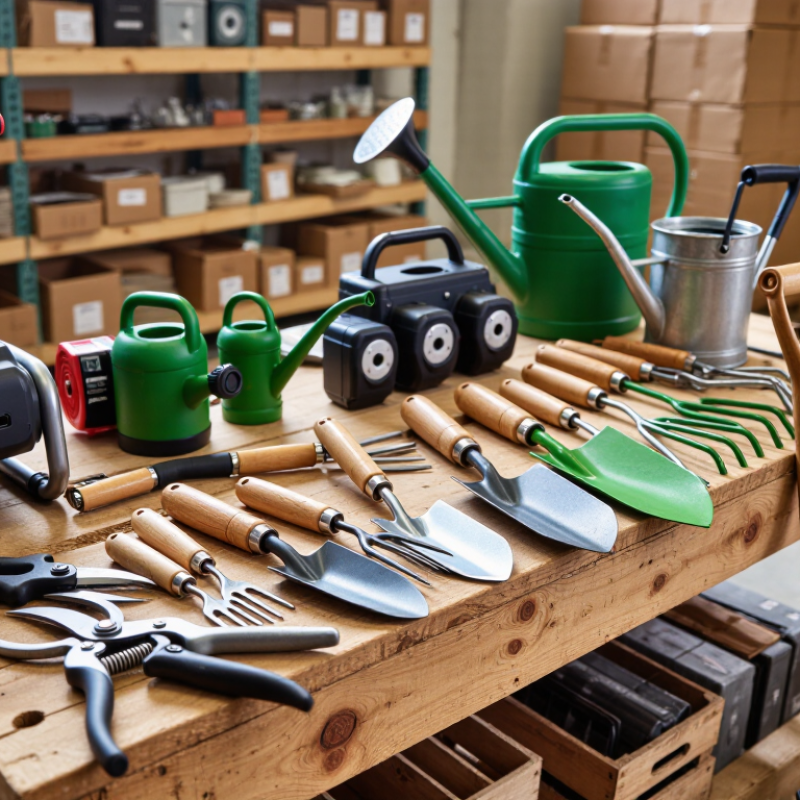
Global Garden Tools Demand: A $31.5 Billion Market in 2022
China Top Garden Tools Manufacturers for Global Buyers
Global garden tools demand reached an estimated $31.5 billion in 2022. This figure shows a large, active market. Home gardening, landscaping, and urban planting continue to support demand. Buyers now seek pruning shears, hand trowels, loppers, hoes, and compact power tools. Seasonal sales can change quickly. Weather, housing activity, and local gardening habits all influence orders.
Chinese manufacturers serve many international sourcing programs. Their strengths often include broad product ranges, flexible production, and established metalworking experience. Reliable suppliers should provide material details, load testing, sample approval, and traceable quality records. For hand tools, buyers should inspect blade hardness, handle grip, rivet strength, and corrosion resistance. Small defects become expensive when containers reach distant warehouses. Factory visits or independent inspections can reveal process gaps that samples hide.
The market figure is useful, but it is not perfectly uniform. Different reports may measure retail sales, factory shipments, or selected tool categories. That gap deserves attention. Global buyers should compare definitions before planning annual volume. Packaging also needs practical testing, especially for humid ports and rough handling. Some suppliers may promise fast customization, yet color, tooling, and packaging changes can extend production time. Clear specifications reduce this risk. A careful purchasing team can request pilot orders, review failure rates, and keep communication records before expanding cooperation.
| Data Dimension | 2022 Data Point | Unit / Classification | Relevance for Global Buyers | Data Basis |
|---|---|---|---|---|
| Global garden tools market | $31.5 billion | Global market value | Indicates a large and established demand base for garden hand tools, outdoor power equipment, watering products and related accessories. | Market figure stated in the supplied title |
| Hand-operated horticultural tools | HS 8201 | International trade classification | Includes spades, shovels, mattocks, picks, hoes, forks, rakes, axes, secateurs and similar hand tools. | Harmonized System commodity classification |
| Portable power tools | HS 8467 | International trade classification | Covers many portable tools with self-contained electric or non-electric motors, supporting demand for powered garden maintenance equipment. | Harmonized System commodity classification |
| Spraying and irrigation equipment | HS 8424 | International trade classification | Relevant to garden sprayers, watering systems and equipment that projects or disperses liquids. | Harmonized System commodity classification |
| Lawn and garden maintenance machinery | HS 8433.11 / HS 8433.19 | International trade classification | Includes powered lawn mowers and other mowing machinery, helping buyers define product scope during trade research. | Harmonized System commodity classification |
| Battery-powered product demand | Growing product segment | Market trend | Manufacturers increasingly offer cordless trimmers, blowers, pruners and lawn-care tools to reduce emissions, noise and maintenance requirements. | Observed industry product-development trend; no separate market value stated |
| Manual tool demand | Core product segment | Market segment | Manual tools remain widely used for pruning, digging, planting, cultivating and general garden maintenance because of their simple operation and low ownership cost. | Product-use segmentation; no separate market value stated |
| Residential gardening | Major end-use application | End-user segment | Includes household gardens, balconies, patios and small private landscapes, where compact, lightweight and easy-to-use tools are commonly required. | Standard end-use segmentation |
| Professional landscaping | Major end-use application | End-user segment | Professional users typically prioritize durability, operating efficiency, spare-parts availability, safety and consistent product performance. | Standard end-use segmentation |
| Public and commercial green spaces | Institutional end-use application | End-user segment | Municipalities, property managers and facility operators often require equipment suitable for parks, roadsides, campuses and large landscaped areas. | Standard end-use segmentation |
| Key sourcing requirements | Quality, safety, compliance and supply stability | Procurement criteria | Global buyers should assess material specifications, ergonomic design, packaging, testing documents, warranty terms, production capacity and delivery performance. | International B2B procurement criteria |
| Recommended supplier evaluation | Product fit before price comparison | Purchasing process | Compare suppliers by product category, applicable HS code, target-market requirements, minimum order quantity, lead time, quality-control process and after-sales support. | Best-practice sourcing framework |
Note: The $31.5 billion figure is presented as the global garden tools market value for 2022 in the supplied title. Product classifications are based on Harmonized System categories; individual HS codes may include products beyond garden tools and should be reviewed according to the importing country’s customs rules.
Related Posts
-
2026 Top Hand Held Chain Saw Buying Guide for Global Buyers?
-
Best Petrol Chain Saw for Global Buyers in 2026?
-

10 Essential Tips for Using a Brush Cutter Effectively?
-
How to Choose the Best Hand Held Chain Saw for Your Needs?
-
Top 10 Gasoline Chain Saws 40.2cc You Should Know About?
-
Top 10 China Chain Saw Models You Should Consider Buying


